My name is Samantha, and I am born and raised in South Florida, and I am elated to share my birth story and my journey with all of you.
So I'm currently 31 but my first birth was when I was 18 years old, and ever since I was a kid. From the start, I wanted to have a baby, and I knew I wanted to do it unmedicated. It was like an innate urge, something I just felt very natural about. And so unfortunately, I felt victim to the business of being born. I was another brick in the wall. I did no preparations for that labor and delivery. You know, my birth experience when I was 18 was dramatically different from my birth experience when I was 31 you know, I, unfortunately, I had the epidural and I ended up actually having an episiotomy at age 18. And the dilemma there was, I was so numb from the epidural that I didn't know if I was pushing or not. I literally had no sensation, which is crazy to think. So they did give me an episiotomy, and nonetheless, my son was born, but I did walk away feeling so disappointed, not only in myself, in a way, for not reaching a goal that I wanted to just go unmedicated. Millions of women have done it before. Why can't I do this? You know, I'm young. That was my intention. I was disappointed in my care team did not take the time to really vet who I was working with for that experience. Was there
a sense that they didn't take you seriously? Because you were young,
absolutely, you know, I was young wild, and I think they definitely did not take me seriously, which is unfortunate, you know, especially maybe not having quite the education I have now around birth and advocacy, did
they see a partner at your side? How did you come across to them? As far as your situation?
There? Definitely came across as a single mother. My partner at the time was not overly supportive, so I was a single mother essentially from the start, yeah, yeah. And I was actually raised by a single father. So to me, it was kind of something I was used to, in a way, but that definitely played a hand in how I was perceived by healthcare individuals.
So yes, so I got married and my amazing husband, Cody, who is a dream come true, the most supportive man in the world, we actually ended up doing some genetic testing at my OB GYN office after we got married, because we wanted to have children, and it came back that we were both carriers of a fatal kidney disease, polycystic kidney disease, and with that, we have a one in four chance of our offspring having the disease. So we knew from the start about this that we could either a conceive naturally and take a gamble, you know, take a risk and see if the baby was, you know, the one in four or the three of four. And unfortunately, we did conceive naturally, but our little angel baby did have the disease, so it resulted in a baby loss, which was very sad to say the least, which catapulted us into IVF, the other option, so, which is amazing, through IVF, they can screen the embryos, you know, if an embryo has the disease, or if they're a carrier, or if they aren't A carrier, they're just they didn't get the gene at all. So that is what led us to doing IVF for genetic reasons, not for infertility purposes.
So with that weight on my chest, I knew this was my moment to vindicate my goal of having an unmedicated birth, because one going through what we did, this was such a privilege and a blessing to be pregnant. Once we actually got pregnant, I knew that I probably wasn't going to be pregnant again after this. You know, we wanted our one and done. So this was it. This was my moment to shine, and that truly started my my journey over the nine months of being pregnant, researching and learning about unmedicated birth and labor and delivery.
How many years apart was it between your son and this pregnancy? 12 years long time?
Yeah, yeah, very long time. And everything is so different now than it was in 2013 that's for sure.
Samantha, before you go further with the with this first story, can you just give us a little sense of how you felt? What was it like for you, 12, you say, 12 or 13 years later, 12 years later, 12 years later. What was it like for you when you found out? You were pregnant at this time and stage of your life with a partner that you were in love with, versus how you felt when you were 18 and you wanted so badly to be a mother. And I can relate to that feeling so well, because I had to, like, hold on for dear, dear life, not to get pregnant too soon. And my in my life, I made it to 26 but what was just like when you first found out you were pregnant? How did it
feel differently to you? It was like a shock wave, Truly, truly, such a different emotion and feeling, not only just because of IVF, but to be in a dramatically different place in my life, financially, spiritually, emotionally, it was a true blessing, something I will when I'm 80 years old, go back to in my dreams finding out that I was pregnant. It was serendipity. It was amazing.
And did you feel concerned at all about the age gap between your kids?
Possibly, however, those were fleeting thoughts, because in my family, we truly lead with love, and my son is just truly such a lover. I knew he was going to embrace his sibling, his baby sibling, to the fullest, you know, and the loss was hard for him to you know. He knew about the baby and all that. So he he wanted a little brother or sister desperately.
So I spent a solid nine months studying HypnoBirthing, listening to your podcast, reading books, watching YouTube videos, truly anything and everything I could do to educate myself about unmedicated birth and a physiological birth I did. I mean, I spent hours, we're talking, preparing myself. Because what I gathered was this isn't so much a physical game. This is a mental game to the fullest. Of course, contractions and surges are painful, but you can do anything for a minute, anything for a minute.
So I ended up being induced at 39 weeks and three days. And the sole reason for an induction was IVF. I did not exactly want to be induced. Of course. You know, I was trying to induce my labor naturally, with all of the ways that I could. However, ultimately, we did decide to proceed with an induction due to just some statistics around an IVF pregnancy, stillbirth rates and whatnot. Can you
talk to us a little bit about that? Because I feel like the medical model of birth really has a strong hold on IVF mothers, not just because there are some increased risks, and some of those are just related to the fact that many IVF mothers are older, and when we're older, there are increased, slight increased risks in General, not on an individual level, but in general, for older conceptions, older pregnancies, but because a woman and her partner have invested so much in an IVF pregnancy, it is so easy for them to be persuaded into an induction, because it just feels like it's this one opportunity. Tell us about that. Tell us what your experience was like. Tell us the statistics that you were told and how you made that decision.
Yes, so I did heavily research the statistics that my doctor, my OBGYN, and the maternal fetal medicine doctor had shared with me, and you hit the nail on the head. Most people who do IVF, either have infertility struggles or they are older and there's underlying issues there. For me, wasn't the case. Personally, Cody and I, my partner, we just didn't want to take the risk. And honestly, at the end of the day, I knew I was going to do this unmedicated, whether I was induced or not, and I just felt because there were so much at stake, like the stakes were very high. Let's just do the induction. I'm just a few days away from my due date. Anyways, I had my bloody show. I mean, I was essentially there. I was three centimeters dilated, 85% effaced. So I do that.
Sorry. You were three centimeters dilated and 80% effaced before you had any induction intervention. So you were, oh yeah, you were already on the edge.
I was, I was there. That's why I think, you know, yeah, they gave me, you know, I was induced, but my body was certainly very receptive to the induction process, which I don't think all women who are induced can say that. So we did have that on our side, but I'd be lying if I said the fear around IVF pregnancies and inductions, the what ifs. Of course, they play in your mind. You know, especially after you've gone through so much, you're like, Eh, let's. Pursue this option, just play it safe. That was the thought around that if it weren't for IVF, I would not have been induced.
A very important consideration in induction is how the mother feels about it, because we're so often talking about, you know, avoid induction. Avoid induction. Avoid induction. Because mothers are pressured into induction when they don't want it, they don't feel ready, but they're scared into it. You were coming from a place of you probably intuitively knew you were ready, even before you had that cervical exam or whatever to find out where you were, because you wanted it. You felt it was resonating with you. You wanted it. You felt good about it. You felt in charge of your decision, and you felt you could handle it. That's coming from a very different place than a woman who is induced because she is she's been threatened into it, and she's afraid, and she succumbs to it, and her body's not ready.
I definitely did feel ready, and I listened to my body. I'm so intuitive, even not pregnant, you know. So in that moment, channeling my divine feminine energy. I was ready. We were ready to go.
So what happened? How did the induction go? It went amazing.
We arrived to the hospital. We were put in the most beautiful room, overlooking oak trees, like there were so many trees everywhere. My husband and I are major nature lovers, so it just felt like it was meant to be. You know, they started my Pitocin low and slow and throughout, from that point on, when I started the induction, which I want to say, was around one in the afternoon, until I gave birth around midnight, I only had one cervical check, which is amazing, because I had known I was three centimeters dilated to begin from my previous OB GYN appointment, and then they didn't check me until, you know, right before transition. So it was the actual induction itself worked well for me. I just took it as it was, what was meant to be, and I continued forward.
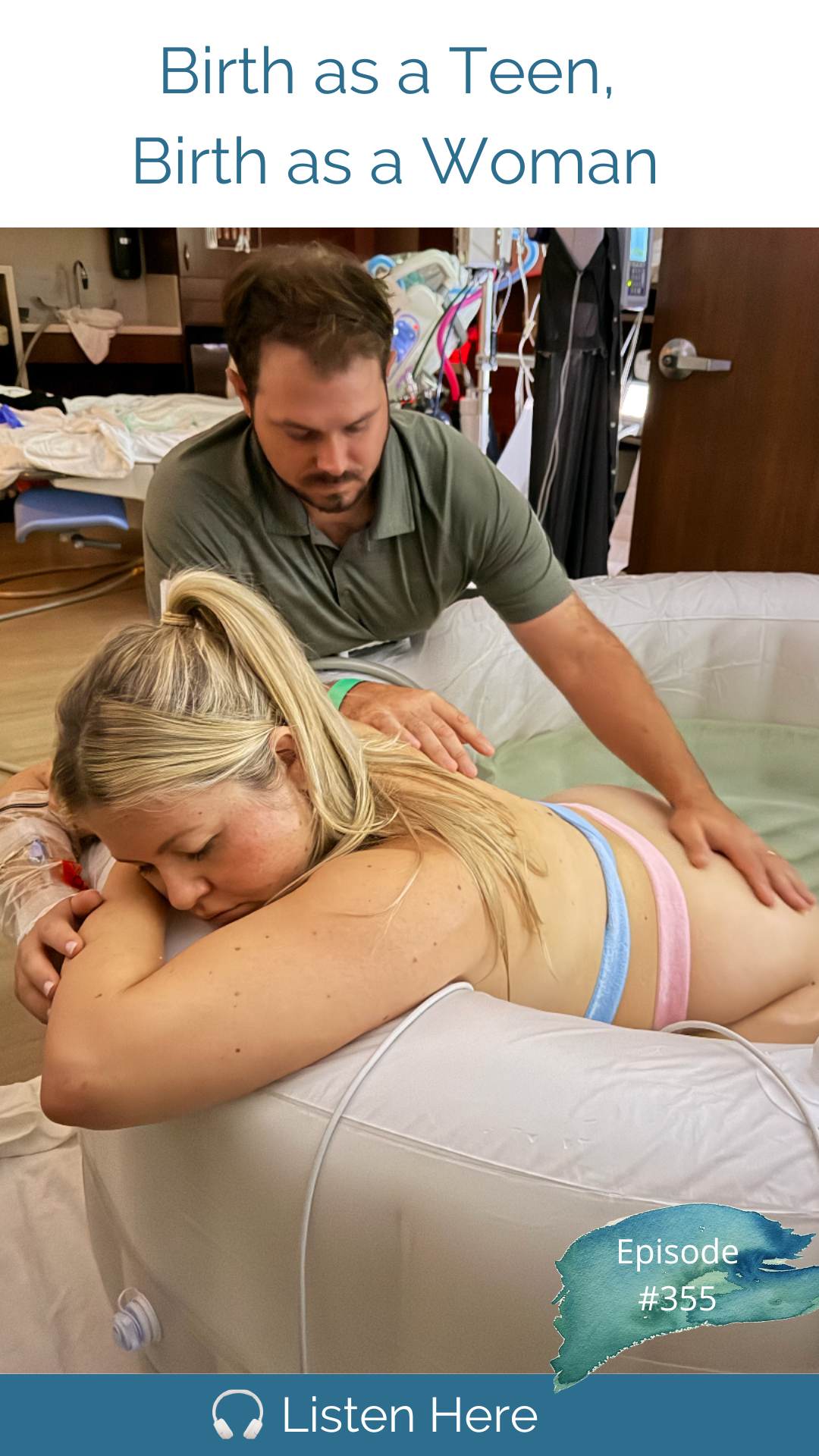
I just labored as if it was the most natural thing in the world. I was on my feet the entire time. I didn't sit down, I didn't lay down. Counter pressure was everything to me, that's for sure. And that's how we started. Once the surges started picking up, my husband and our amazing doula, Samara, would do the counter pressure on my back, and that was probably my favorite tool of my toolkit, which I had quite a few. I also utilized a 10s unit recommend for early labor, not so much active. I had a birthing comb. I had my music playlist that I curated.
Yeah, so was the was the medication, the only medication you received in your induction, Pitocin?
Yes, ma'am. Pitocin was the only medication I received. There was no need for any cervical ripening, and I certainly wasn't about to have any sort of painkiller or anything. And frankly, at that point, I didn't even feel like that would have been warranted or needed. I mean, the pain level was so nominal up until really transition for me, at least.
So isn't that done all by IV? And how is it that you were able to move around so freely? Did they give you some kind of portable thing, or did you just stay near the bed? It's so great that you were on your feet the whole time. You never hear that about induction, yeah, yeah.
Everything was portable. I had wireless monitoring, so it was all done through Bluetooth and and then the actual IV. Yes, it was through IV, but I just walked around with it. My partner or my Doula helped me walk around with it. Yeah, we just meandered around the room.
That's a really important aspect of this for our listeners to understand, is that when you are having an IV and when you have Pitocin, you can't really do it with an epidural. So Well, although they do have, you know, low epidurals, where you can have a little bit of mobility, the walking epidural, or you can get, sometimes a little bit of mobility, but with Pitocin and electronic fetal monitoring that's done wirelessly. It's called telemetry, you can be out of bed, and it's so part of the reason that you didn't need an epidural was because you're out of bed and you were you were out of your bed, you were on your feet. You were moving. You were allowing your body and your baby to work together and do all the things that you know happen in a physiologic birth.
And that was what set me free, in a way, because I am such a mover and shaker in my nature, the thought of being bedridden actually gave me more anxiety than the thought of, you know, I wanted to be mobile. I wanted to be able to move when my favorite song came on, I wanted to dance, and I did. I moved. I moved my body. And that's again, it just felt like I wanted to follow my intuition and my nature, what my god given body was made and designed to do, and I wanted to follow that. And I did highly recommend moving around as much as you can.
Saving Grace, I really I labored on the bed, leaned over, letting gravity do its thing. My husband and doula were behind me with the counter pressure. Probably did that for a solid two hours. I did labor with my shoes on. So if you have, you know, any issues with your knees or your feet, definitely wear your sneakers. My Doula was like, wow, most women are barefoot.
Yeah, we I don't think I have ever seen a woman give birth with her shoes on.
When I went to push, shoes were off, okay?
Was there a point in labor where you felt like, get these shoes out of off my feet, like I can't, I can't have this anything on me. Or did you or did somebody tell you to take them off? Or what happened? Because that's very unusual.
Yeah, definitely. I have really small feet, and throughout the end of my pregnancy, my feet hurt so bad, you know, I was still going through my walks, and I had to have my shoes on constantly. So for me, it just worked. And they eventually came off because I got in the birthing tub, and then at that point, we were getting down to business, and it was time to push so there was no need for them to come back on.
But yeah, I labored with my shoes on, and my water broke and went right into my shoes, which, that was another intention of mine. I felt very strongly about not having my water broken. You know, it was an induction. And with an induction, sometimes the application of an induction is to speed labor along, and was not about to have that no one was going to break my water. And by the grace of God, it broke on its own after the two hours of laboring over the bed like that.
So things really picked up from that point. What a cool sensation to feel your water break. It was just the neatest thing.
Yeah, not everybody feels it. Some women don't notice, especially if they're in the tub, but other women, you know, you can feel the splash down your leg, or you can feel the sensation inside your body, or you can hear a popping sound,
yeah, it was so cool. Love it. 10 out of 10 recommend.
So at that point, honestly, labor kept on going. My my beautiful doula set up our room. We had Galaxy lights. The lights were dim. We had the playlist going. And you guys know The Twilight Saga, by Stephanie Meyer, I'm a huge nerd in that way. I love Twilight. And it was actually playing on TV. We had it muted, but it was playing. It was just one of those things.
So at that point, I actually visited the dilation station, which is the toilet. I definitely utilize that seat. Moved around on that a bit and relaxed. And did that probably for 30 minutes. And then it was time to get into the tub, which was probably my second favorite item of my toolkit, the birthing tub.
Wow, I have a quick question for you. What were you? What clothing were you wearing when your sneakers were on? Were you in a hospital gown with sneakers on? Were you in your own clothing with sneakers on?
I bought my own hospital gown, so I did have, okay, so I had a different gown on, but, yeah, no bra, nothing.
Just for your own clothes, your own shoes, yes, ma'am, on your own terms. Okay, yeah. I think that matters a lot. I think that it gets overlooked a lot, that when you wear your own clothes, you do somehow keep your own agency. It is, it is strange to wear someone else's clothes, even if you're at a friend's house and you're chilly and they give you a sweater, you're very aware that you're not wearing your own clothes. And I do think that there's more value and power in that than women realize. You have the right to wear whatever you want in the hospital. You by no means have to put on a hospital gown, absolutely.
And that was also part of the premise of, okay, we decided to give birth in a hospital. Well, I still have my birth preferences, and you don't have to do X, Y and Z, just because the hospital tells you you need to, or they give you this gown that 1000 other women have worn. Well, you don't have to wear that
gown, and mainly, mainly sick people have worn, right? I mean, hospital gowns are designed for people to be in bed ill either. That's how, why they open the way they do, so that you can have easy access. It's like, mentally, in our mind, that's what we associate it with. Is, I think it's number one on the list of our things to do when choosing how to make your hospital birth feel like home. Is our our episode, or our Patreon event or something, and I think that's number one on the list.
Yeah, I love that. I mean, honestly, even looking at that gown. I don't know about you ladies, but almost gives me anxiety, like, if they're ugly, they're uncomfortable,
no, they're gaping open in the back. Yeah.
I mean, come on, who wants that? Not me. That was not going to help me achieve my goal in this that's for sure.
So you got in the tub, I got in the tub, and I actually did not even put on a swimsuit top. I just just got in the tub, entirely nude, and the tub was incredible. Talk about relief. The surges had definitely picked up at that point. This is entering transition. I could just tell, because something I had learned throughout all my research was when you start to feel like you can't do this anymore, that's how you know you're getting close, you're getting close to meeting your baby. You're transitioning.
And I did have a fleeting moment of wow. I don't know how much longer I could do this, but I never once said I can't do this. I never once said that, not out loud or to myself. I just knew I was getting close. So being in that warm water, and my husband, he had the hose, he was putting warm water on my back, and we were keeping with the counter pressure, it was the most incredible sensation. I truly, truly succumbed to giving birth, and I was in labor land, and I surrendered entirely in that moment.
I also practiced up breathing. So I had my my breathing techniques throughout this whole thing as well, which majorly helped, four seconds in, eight seconds out, three sets of that, and I would literally count on my fingers. And having that ritual, if you will, also carried me through.
Did you do that breathing in between contractions or during contractions? And did it feel natural and sustainable during contractions?
I did the breathing techniques during the contractions, and it did feel sustainable and natural to me until we got to pushing. So I continued on with the counting. It was almost like a little pocket of peace, like a coping mechanism for me. I would literally count on my fingers, and it was a way to channel the sensation.
Yeah, I mean, that is something we can do. And the way I talk to my clients about that is it gives your conscious mind something to focus on, because your body is birthing unconsciously. And when we get the conscious mind involved, it tends to not support the process. So when we're breathing deeply, we're visualizing that all works in the unconscious, we're visualizing our body relaxing, opening. But if we have something conscious, like counting, it's like our conscious mind is over here and it's allowing everything else to happen over there.
That's a beautiful way to put that, and that's so accurate to my experience. Yeah, that's I
just want to make one comment also about the water. You said that when you got in the water, it just like, took you to another place in your mind, in your body, and gave you that strength and stamina to be like, oh yeah. I did feel like I couldn't do this, and now here I am. I can do this. There's a lot of controversy out there about water birth lately, and one of the things, one of the big things that is being said about water birth is that women shouldn't feel that relief in labor, that they that they should, that that water is actually like a substitute for pain relief, and that it's taking away something from their physiologic experience of birth, and I just wanted to emphasize that with what you said, because I just so vehemently disagree with that, like it's so absurd to think that a woman shouldn't be comforted by something in labor. It's like exactly what her physiology needs to relax to get through the hardest part. I agree
that's that's actually low key, high key, insane. If we were 1000s of years ago in the woods, in the nature, you mean to tell me, as a woman, I want to get in the river, I absolutely would be getting in the river.
It's no different to me than putting a cold washcloth over a woman's forehead or putting some counter pressure on her back. I mean, why are we trying to discourage women from having an experience in labor that helps relax their body?
I agree. Yeah, that's I have not heard that that's wild. Definitely recommend a birthing tub. Yes? Yeah, absolutely. You know, had I had a home birth, I would have loved to have given birth in the tub, in the hospital. You can't actually deliver in the tub, but I got the second best. You know, I felt it was fair for my experience and carried me through.
We were just talking about Trisha, we were just talking about this. How often they ask women to get out before the baby comes out. And if they don't have a compelling like, you know, policy or way to do it, they they, they often will tell her something. They'll give her a rationale, oh, we need you to get out now.
So what happened at what moment did they tell you to get out? Where were you? What was happening when they told you to get out? Um, so
my doula and I knew in advance that my midwife would not be delivering in the tub. So my Doula, who was just so clutch, she was like, Okay, it's time to get out, because I started to feel the sensation of pushing at that point, the only relief it couldn't it was no longer my breath. It was no longer the water. The only relief from the surge that I felt would be to slightly push, and at that point, once I shared that with my Doula, she was like, Okay, it's time to get out.
So no problem. We transitioned out of the tub, got dry and visited the dilation station one more time, and this is where the pushing really started. And each contraction, I would stand up and put my arms around my Doula, and we would sway. We would do a dance together. She was literally holding up my body. I was leaning on her, and we would sway. And that just goes back with the movement and being on your feet, it was the only relief that in tandem with letting a push come out, really, I started making those guttural, instinctual noises at this point.
So we did that for a few more minutes, and then my Doula again, she truly carried me through. She said, Okay, let's go ahead and go to where we're going to birth the baby I laid down on the bed. They brought me the peanut ball. Had it in between my legs. That's where I felt the ring of fire for the very first time in my life. And what a distinct and unique sensation. You know, on one hand, you have the contractions which hurt. And I say that in quotation marks because they're intense. I don't like to say they hurt. I like to say they're intense, and then the Ring of Fire happens. Completely different sensation. You have two different feelings.
So she started to crown in that moment. How did
you feel in that moment? What was the Ring of Fire experience like for you,
true to its name, but not quite as painful as I would have thought. You know, I It really wasn't all that awful to me. I was just so excited because I was right there. I knew at that point, like I'm about to have my baby girl, my little rainbow baby.
Did you touch your baby's head or anything at that time? Did you feel?
Oh, yes. So I would like at this point, when I got on the bed, getting ready to actually birth her, I did utilize another tool in my toolkit, which was nitrous oxide. I fiddled with it very early on in active labor. However, it kind of gave me nausea, so I diverted away from it for the duration of my labor. But at this point, I did revisit, and I will say it was another little pocket of peace that I needed in that moment, just, you know, consciously put that there. So I did fiddle with nitrous. Yeah, that was another positive to the toolkit, I'd say.
And at that point, my amazing doula came through again. She said, we're putting this bed up and we're getting the squat bar out. And this was something that her and I had discussed, but, you know, we'd had no concrete plan of this. We just went with the flow. They propped up the squat bar. I was so comfortable in this position, it was amazing just being upright again. I'm not trying to lay on my back.
At that point, my midwife, quite literally, did not intervene. The entire time she was standing in the corner. Hi, Claire. She was standing in the corner watching me. The nurse said to her, aren't you going to do something? She said, Absolutely not. She's doing exactly what she needs to be doing to have this baby.
So at that point, I got into the squat position, and my midwife said, reach down, feel your baby, another unexpected event I did not plan that. Reach down, touch my baby's head. Wow. What. What an experience.
And at that point I did three solid pushes, and my midwife says to me, okay, reach down, you're going to catch your baby. I was not expecting that. I was a little nervous, apprehensive, but I dove right in, reach down, caught my baby and brought her to my chest and like that. No more pain, no more intensity, nothing.
Giving birth to my son, my first birth, he came out. It was so traumatic. I almost had an emergency C section. I was just crying like ugly crying, because I was so scared, emotional, freaked out from what I just went through. I was just told I had an episiotomy done, and I said to my Doula, this time, I want to smile and I want to laugh. Laugh, and I did. The moment she came out, I had the biggest smile. I was laughing, I was boastful, I was joyful. And there's a photo of me with the biggest smile on my face. So that was another goal that I set forth for myself, that I achieved.
What a beautiful moment that was, and it was truly, truly amazing.
Yeah, I think people really either underestimate the power of touching their baby as their baby is coming out, or just are not offered the opportunity to experience it. And when you are on your back in bed, it's more difficult. I mean, you can still do it, but you got to really kind of hunch over and reach but in an upright position, or in a tub or hands and knees, it's a lot easier, and it is such a powerful moment. In one of the most intense moments in birth, you mix that with this also incredibly powerful moment, but on the complete opposite side, it's like the relief, it's like the connection, it's like the excitement. And on the other side, you have the intensity, the discomfort that I don't know if I can do this, and you just, like, blend those two things right in that moment. And it just, I don't know, I feel like it's transformative for those last few moments of birth and getting your baby out oftentimes without tearing because of it.
Yeah, I agree. The world stopped. Quite literally, the world felt like it stopped spinning in that moment, touching her head and then in the next push, catching her literally grabbing my baby, feeling her come out in the most beautiful position ever, in the squat, just bringing her to my chest. Talk about, talk about transformative for sure, in
comparing your two birth stories, it's clear you had far better providers the second time around. And I think that's going to be the easy conclusion that listeners will grab from this. But you and we know that motherhood changes us dramatically, because we for the first time in our lives, no matter how young you are, when you become a mother, you are only 18, you are immediately responsible for the most important thing in the world. You're immediately someone else's advocate.
So do you have any appreciation for the different woman you were giving birth the second time around. And how would you describe how your own personality changed between age 18 and 31
absolutely, you know, when I was 18, I was a little Rosebud in the garden, and now feeling being 31 feeling like I'm a blossomed rose in its height of its life, possibly even not only just through my own experiences in life, you know, having to be a single mother at such a young age, working, going to school, finding the love of my life, all of the life experiences, but physically, you know, I go to the gym. I'm very healthy, so I feel like I did a complete 180 you know, as growth should be in life, definitely a different woman that I was when I was 18 versus now.
And how did that new version of you at age 31 change you as a client of the hospital that you were birthing in?
Well, first of all, the education factor, just actually being educated to know that I have rights. I don't have to just go with what this random nurse is telling me, or I don't have to do what this doctor is telling me. So that's a major point to that. I did not have that when I was 18, I just out of sight, out of mind. Ignorance is bliss, in a way. Yeah.
Also when you were 18, you said you were raised by a single father, yes. And you did you have any friends who were having babies? Did you have any family members, aunts or anybody around you who was also having babies at the time? Or how would you have had the support system at that time in your life to really know how to educate yourself and navigate a physiologic birth or your birthrights, or, I think, when we're young, and especially if we don't have that, we just sort of assume that we'll go there and it'll be fine. We'll just figure it out along the way. It's kind of how 18 year olds operate, yeah, much of the time,
literally, very much. So that was me, you know, I did not actually have anyone around me having babies, so it was a new journey I was embarking on in its totality. So that definitely played a role. You know now, of course, being 31 you have seen many babies. You have a lot of family, or I have a lot of family and a lot of friends, and that definitely had a hand in it as well.
I think we fail to recall most of us who didn't have our first babies at a very young age, or as teenagers, as you did, we've failed to recall that at that age, all of us, like for any of us, everyone in your life is an authority. When you're 18, everyone is an authority. Your boss at work, if you work, every teacher you have, every relative you have, is is an authority over you. And when you're a mother, no matter how young you become a mother, you become an authority.
I agree, when you just said this about authority, it brought me right back to laying in that bed when I was 18, and I was actually by myself for a period of my labor, and I looked at my nurse and I said, "Oh, this really hurts. Can I hold your hand? Like can I hold your hand please and squeeze your hand." She told me no. She did not give me her hand. She told me no, and said, "I've been a nurse for 35 years. If I let every woman squeeze my hand, my hand wouldn't work anymore." Oh, my God. Talk about rejection that haunts me. That was brutal.
I believe that. I mean in your most vulnerable moment, you reached out to somebody whose job it is, it's her job to support you, and she said, No.
And then 18 year old, she's she said it to an 18 year old, yeah. She's heartless,
truly, yeah. So I definitely at 18, everyone is an authority figure, and I just took it. I was like, oh, okay, I guess I this nurse isn't gonna hold my hand. Okay, I'll just be here alone.
Which of your two births taught you the most? Was it the one where everything went sideways because you weren't prepared? Did you ultimately learn the most from that one, or was it the second one? Would you say I
think the second one because I was just truly unaware when I was 18 about all of this so many points of this conversation, I left that experience feeling traumatized and disappointed, but I think it took me time to reflect back on and learn from that, whereas with this birth, I just I learned so much through my nine months of research and having a dream team behind me. So, yeah, definitely learn more the second go around.
What's the ultimate reason you wanted to share your story today?
Oh, so my intention was sharing my story is that I wanted to empower women out there who are listening to know that if you do have to have an induction, or if you want to have an induction, and in the back of your mind you want to pursue an unmedicated, physiological birth, that just because you have an induction does not necessarily mean that you cannot achieve that goal. There's a lot of fear on both sides in the birthing industry, and I just want to be an inspiration to someone who maybe isn't feeling so confident. I want them to know that if you set a goal for yourself and you are mentally prepared, and you do the best you can do, you can do this one 100% you can have your dream birth. You can give birth unmedicated, like the millions of women have done the God given gift to give birth, and that was my true intention with wanting to share my story on your podcast. I really do hope I can inspire someone out there and the ways that I was inspired by listening to other stories.
Thank you for joining us at the Down To Birth Show. You can reach us @downtobirthshow on Instagram or email us at Contact@DownToBirthShow.com. All of Cynthia’s classes and Trisha’s breastfeeding services are offered live online, serving women and couples everywhere. Please remember this information is made available to you for educational and informational purposes only. It is in no way a substitute for medical advice. For our full disclaimer visit downtobirthshow.com/disclaimer. Thanks for tuning in, and as always, hear everyone and listen to yourself.